Jan. 21, 2026
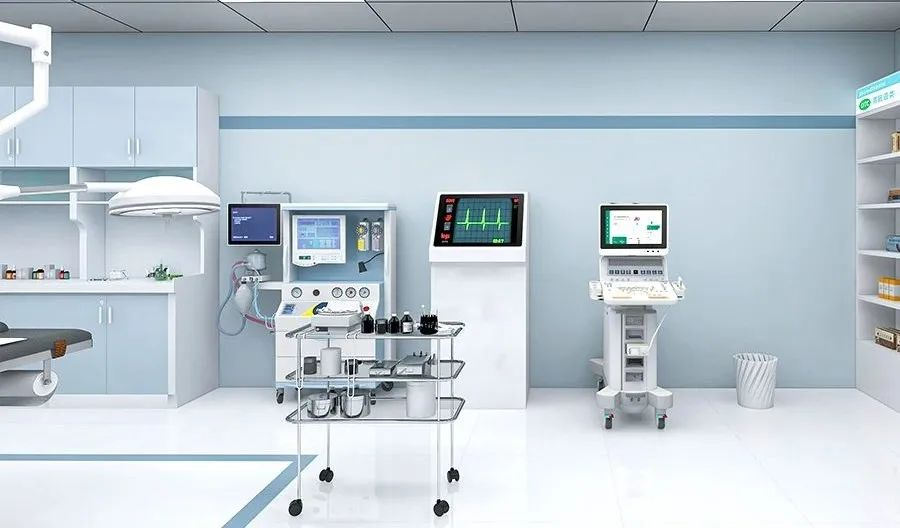
Open-type touch displays have become a core interactive tool in modern medical environments, improving diagnostic accuracy, surgical precision, and
healthcare efficiency through intuitive touch operations.
Core Functions and Value
•Improved Diagnostic Accuracy:** Displays conforming to professional standards such as DICOM accurately reproduce the grayscale and color of
medical images, helping doctors identify subtle lesions.
•Optimized Workflow:** Intuitive touch operations simplify image viewing, zooming, and annotation, accelerating diagnostic decisions.
•Adaptability to Harsh Environments:** Designed specifically for medical environments, these displays are dustproof, waterproof, antibacterial,
corrosion-resistant, and easy to disinfect, ensuring equipment safety and hygiene.
Key Technologies and Design Features
To ensure reliable and safe use in medical settings, these displays incorporate several key technologies:
•High Visibility and Accurate Display:** Utilizes anti-glare technology to maintain clarity under various lighting conditions; supports professional color
and grayscale calibration to ensure reliable image diagnostic data.
• Professional Interaction and Robust Design: Most models support "glove touch" functionality for convenient operation by medical staff; the front panel
typically achieves an IP65 protection rating, preventing liquid splashes and dust intrusion, and uses reinforced glass to resist scratches.
• Medical Safety Certification: Mandatory certifications such as IEC/EN 60601-1 (Safety of Medical Electrical Equipment) are mandatory to ensure electrical
safety in clinical environments.
Diverse Medical Application Scenarios: Different scenarios have different requirements for displays, resulting in diverse applications and characteristics.
Diagnostic and Imaging Departments
• Core Requirements: Accurate image interpretation
• Key Features: High resolution, DICOM standard compliance, accurate color
• Applications and Cases: Used in diagnostic workstations for CT, MRI, and other imaging; Elo brand display components are used in equipment such as
breast ultrasound at GE Healthcare.
Operating Room and Interventional Therapy
•Core Requirements: Real-time control, sterile environment
•Key Features: High protection level, easy cleaning, supports glove touch control, low latency
•Applications and Cases: Used to control surgical robots and endoscope systems; the Zeiss KINEVO 900 robotic visualization system allows switching
surgical views via a touchscreen.
Wards and Nurse Stations
•Core Requirements: Convenient access, flexible deployment
•Key Features: Multiple installation methods, supports shared use, intuitive interface
•Applications and Cases: Wall-mounted or installed on medical carts for reviewing medical records and recording vital signs.
Public Areas and Self-Service
•Core Requirements: High-frequency use, public operation
•Key Features: High ruggedness, anti-violence, clear interactive guidance
•Applications and Cases: Used for self-service registration, payment, and inquiry.
Future Trends
With the deepening of medical digitalization, touch displays are becoming more closely integrated with artificial intelligence, the Internet of Things, and
telemedicine. Future devices may integrate more intelligent auxiliary diagnostic functions and further optimize cross-departmental and cross-regional
collaborative workflows.
+0086 755 21042870
+0086 755 2822 5493
Shenzhen Company: 5/F, Building 211, Tairan Science Park, Tairan 4th Road, Shatou Street, Futian District, Shenzhen(518040), China.
Dongguan Factory: 2/F, Building D, Fulin Industrial Park, Weixi Road, Dalingshan Town, Dongguan City(523831), Guangdong,China
NAVIGATION
REQUEST A QUOTE