Jan. 29, 2026
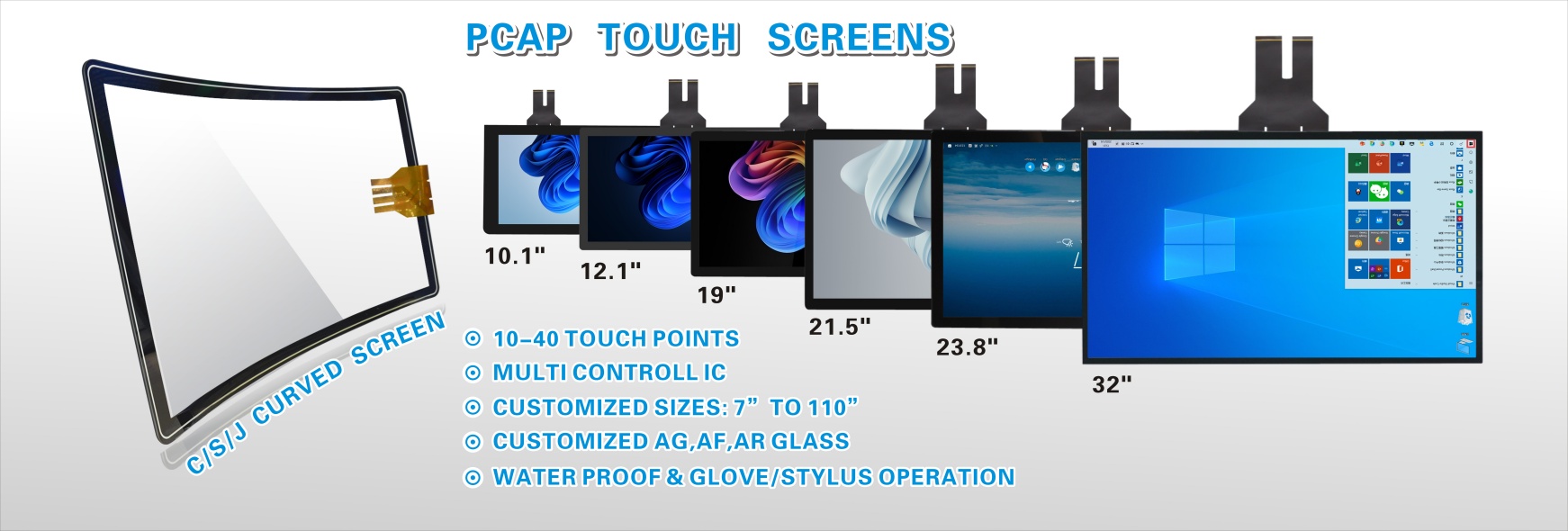
Customized capacitive touch sensors for industrial panels are far more than simple upgrades to consumer electronics designs; they represent a systems
engineering project geared towards harsh environments, extreme reliability, and ultra-long lifespan. The core design philosophy should shift from "
achieving functionality" to "reliable operation for life under harsh conditions." The following are five key dimensions requiring in-depth analysis:
1. Environmental Tolerance: Survival Challenges Beyond the Ordinary
Dust, oil, chemical liquids, and condensation are commonplace in industrial environments. Sensor design must ensure stable operation even under such
conditions.
• Thick Coverings and Glove Handling: Industrial panels typically require tempered glass or acrylic covers 5-10mm thick or even thicker to provide
physical protection and insulation. They must also be compatible with industrial gloves (yarn, rubber, cotton). This demands that the sensor chip
possess extremely strong capacitance detection capabilities (often requiring detection accuracy up to ±0.05pF) and a powerful drive signal to
penetrate thick media and sense minute capacitance changes caused by gloves.
•Wide Temperature and Humidity Range: Operating temperature ranges often need to be from -20°C to 85°C or wider, and it must withstand
high humidity. Temperature drift significantly affects the capacitance reference, therefore the chip's automatic drift compensation algorithm
and hardware design must be extremely robust.
2. Electrical Safety and Long-Term Stability:
** Industrial equipment has a lifespan of over ten years, making electrical safety a bottom line.
* **Ultra-High ESD and Surge Protection:** Industrial environments are characterized by severe electrostatic discharge and power fluctuations.
Meeting only ±8kV human body model (HBM) requirements is far from sufficient; typically, contact discharge of ±15kV or higher is required,
along with consideration for air discharge and power port surge testing. This necessitates coordinated design in sensor electrode layout,
PCB grounding, and protection circuitry (such as TVS diodes).
* **Immunity to Power Supply Noise and Long-Term Aging:** Industrial power supply noise is complex. The chip must possess excellent power
supply noise rejection ratio (PSRR), and its performance and parameters should not show significant degradation after tens of thousands of
hours of continuous operation under high temperature.
3. Mechanical Structure and Integration Design:
** Structural design directly impacts reliability and user experience.
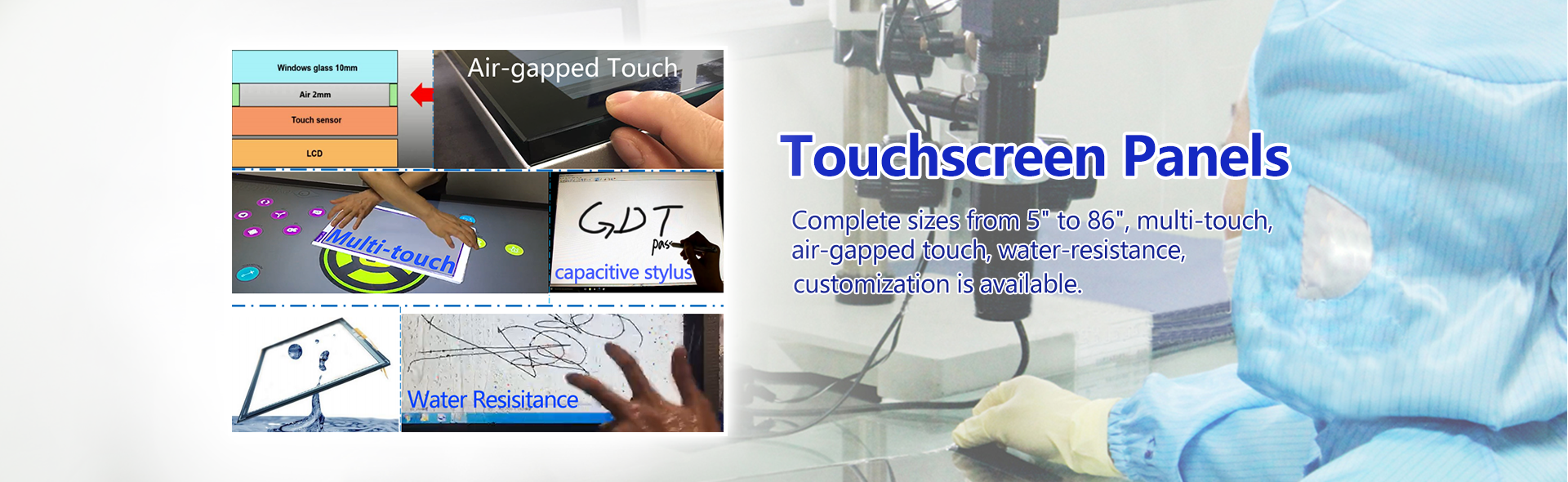
• Sealing and Waterproofing: Many industrial applications require panels to meet IP65/IP67 protection standards to prevent moisture intrusion that could
lead to false triggering or damage. This necessitates meticulous sealing designs for the sensor's FPC cable outlets, connectors, and other components.
Furthermore, the sensor layer and cover plate must be fully bonded without air bubbles to prevent moisture condensation.
• Vibration and Shock Resistance: Vibrations during equipment transportation and use can cause connector loosening and solder joint fatigue. The
design should consider board-to-board connector locking mechanisms, reinforced soldering of critical components, and avoid placing large components
at the PCB edges.
4. Reliability and Failure Prevention
Industrial panel failures are costly; therefore, the design must prioritize failure prevention.
• Redundancy and False Trigger Protection: For critical function buttons, consider using dual-channel redundant detection logic (both sensing electrodes
must trigger simultaneously for it to be considered valid), combined with software logic such as "long press activation" and "secondary confirmation"
to fundamentally eliminate accidental operation.
• Condition Monitoring and Diagnosis: Advanced solutions can monitor the sensor's health status in real time, such as whether the reference capacitance
drift exceeds limits or the signal-to-noise ratio decreases, and can report warnings to the host computer, enabling predictive maintenance.
5. Electromagnetic Compatibility (EMC) Design
Industrial environments are filled with interference sources such as frequency converters, motors, and high-power radios.
• Chip-level Immunity: Select touch chips that have passed rigorous testing according to IEC 61000-4 series standards (such as radiated immunity and
fast transient/burst immunity).
• System-level Design: The sensor's PCB should be considered part of the overall device's EMC design. Touch sensing lines must be kept away from noise
sources and employ complete planar shielding, filtering circuits (such as π-type filters), and even shielding layers when necessary.
Conclusion: From "Usable" to "Reliable" System Thinking
Customizing an industrial touch sensor is essentially customizing a signal detection and protection system adapted to extreme conditions. It requires
developers to:
1. Define requirements according to the most stringent standards, taking oil stains, gloves, ice water impact, and violent operation as design inputs.
2. Perform system-wide collaborative design, optimizing the sensor chip, PCB layout, structural sealing, software algorithms, and protection circuits
as a whole.
3. Perform verification exceeding standards, adding long-term aging tests, extreme temperature cycling tests, and interference tests simulating complex
ambient noise in the field, in addition to routine tests.
Ultimately, the value of a successful industrial-grade custom sensor lies not in its ultimate sensitivity, but in the absolute determinism and reliability
of its output signal under various disturbances throughout its entire lifecycle. If you can provide more specific environmental specifications (such as
protection level, temperature range, specific interference sources) or mechanical structure diagrams, we can match you with a suitable product.
+0086 755 21042870
+0086 755 2822 5493
Shenzhen Company: 5/F, Building 211, Tairan Science Park, Tairan 4th Road, Shatou Street, Futian District, Shenzhen(518040), China.
Dongguan Factory: 2/F, Building D, Fulin Industrial Park, Weixi Road, Dalingshan Town, Dongguan City(523831), Guangdong,China
NAVIGATION
REQUEST A QUOTE