Nov. 11, 2026
The use of touchscreens in ATMs is, at its core, a technical narrative about "making appropriate choices under constraints." An ATM is not a typical
consumer electronic device; it must operate in an unattended public space, endure thousands of touches daily, serve a diverse range of users, and
simultaneously safeguard both funds and personal privacy. Touchscreens became the standard interface for ATMs not because they represent the
cutting edge of technology, but because they offer a viable balance among these various constraints.
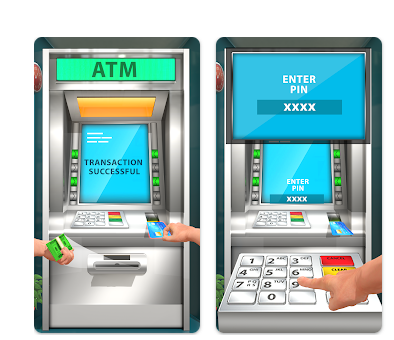
A Pragmatic Technical Choice. Touchscreen technology transitioned from military and scientific applications to the civilian market as early as the
1980s, and ATMs were among the first public-facing devices to adopt it. In the early days, ATMs primarily utilized infrared or resistive touchscreens
—technologies distinct from the capacitive screens now ubiquitous in smartphones. Infrared screens create an invisible grid using emitters and
receivers along the display’s edges; any object that interrupts the light beams is detected, meaning the system is indifferent to the input tool—
a durable design well-suited for public environments where users might wear gloves or use a stylus. Resistive screens, which rely on pressure
sensitivity, are similarly versatile regarding input methods and offer a lower cost. In contrast, while capacitive screens are highly sensitive and
support multi-touch, early versions responded only to conductive objects and were less advantageous in terms of reliability and cost. The selection
logic for ATMs was straightforward: a public device must first and foremost be "functional under any conditions," with "fluidity of operation" being
a secondary consideration.
Core Functions Enabled by Touchscreens. Functionally, the touchscreen transformed the ATM from a simple, button-based cash dispenser into a
self-service terminal capable of dynamically presenting options. Users can select various transaction types—such as withdrawals, deposits, transfers,
or balance inquiries—via the touchscreen. Menus can be adjusted in real-time based on a bank’s product strategy or the user’s current status,
unconstrained by the limitations of fixed physical buttons. Some systems have even incorporated gesture-based controls—such as specific finger
movements to confirm an action or eject a card—aligning the interaction model more closely with how users typically engage with their everyday
smart devices. The introduction of touchscreens has also reduced hardware complexity: a single programmable display interface replaces a
multitude of dedicated physical buttons, allowing banks to adjust the interface via software updates rather than modifying the physical control panel.
Inclusive design marks the true maturation of touchscreen technology in ATMs. Since ATMs serve as essential financial infrastructure, they cannot
exclude users with visual impairments—a group for whom a standard touchscreen presents a significant barrier. The prevailing solution combines
voice guidance with designated touch zones: visually impaired users can plug headphones into an audio jack on the ATM, triggering a text-to-speech
system that reads on-screen content aloud. Fixed touch areas for "Previous," "Next," and "Select"—complemented by a Braille orientation strip
located below the screen—allow users to complete entire transactions without needing to see the display. The core strength of this design lies
in its acknowledgment of the limitations of touchscreens; it compensates for these shortcomings by providing additional sensory channels and
fixed spatial anchors, rather than falsely assuming that touchscreens are equally "intuitive" for everyone. Some banks even pair voice-enabled
ATMs with Braille-labeled keypads, providing an extra layer of redundancy.
Security and durability determine whether a touchscreen can "survive" in a public environment. ATM touchscreens face two primary threats: human
"shoulder surfing" (peering) and technical attacks. To counter shoulder surfing, technologies such as polarizing films and viewing-angle control
restrict the screen's visibility to a narrow range—typically within ±30° of the center—making it difficult for cameras positioned to the side or above
to capture input. Research indicates that privacy filters can reduce the success rate of shoulder-surfing attacks to approximately 15.91%. In terms
of physical protection, ATM touchscreens typically feature a laminated tempered-glass structure that meets the IK08 impact-resistance standard.
Thickened cover glass and explosion-proof films not only protect the screen itself but also deter unauthorized dismantling of the device. Furthermore,
encrypted touch modules safeguard the data link, preventing the interception of touch signals. Collectively, these measures transform the touchscreen
from a fragile display panel into a hardened node within the financial security chain.
Touchscreens have not "disappeared"; rather, they have evolved into one component of a multimodal interaction system. While technologies such as
biometrics, cardless transactions, and AI-driven voice interfaces are increasingly integrated into ATMs, they do not replace the touchscreen. Even after
identity verification via facial recognition or fingerprint scanning, users must still use the touchscreen to select their account and the type of transaction.
The role of the touchscreen is shifting from being the "sole interface" to serving as "one component within a broader orchestration": voice commands
are well-suited for remote guidance and assisting the visually impaired; biometrics handle identity verification; and touch remains the most effective
method for precise menu selection and final confirmation. This division of labor actually reinforces the value of the touchscreen—when it comes to
clearly expressing intent or finalizing critical actions, direct physical touch remains the most reliable approach.
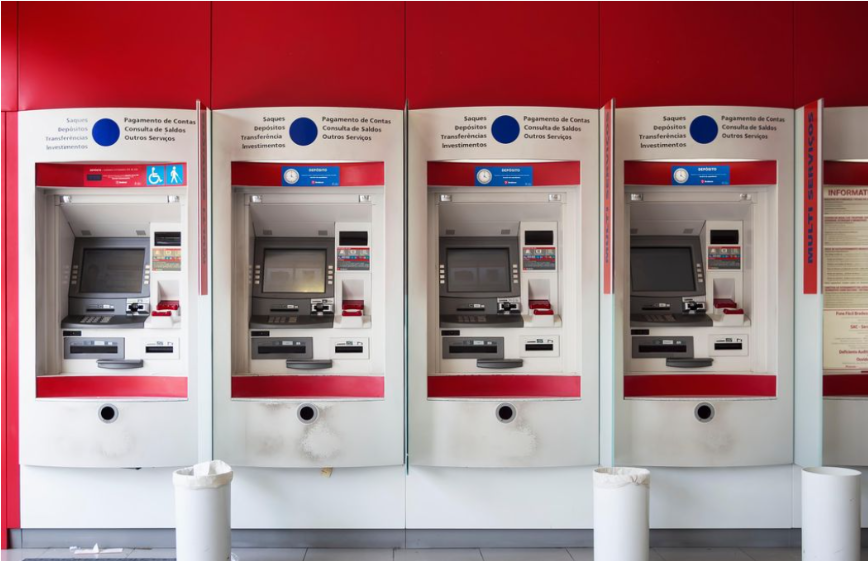
In summary, the use of touchscreens in ATMs highlights a key design principle for public-facing technology: truly mature technological implementation
is not about pursuing advancement in a single dimension, but rather about establishing a sustainable balance between durability, security, inclusivity,
and efficiency. The reason touchscreens persist on ATMs is precisely because they remain the most pragmatic solution for satisfying this set of constraints.
Previous None
+0086 755 21042870
+0086 755 2822 5493
Shenzhen Company: 5/F, Building 211, Tairan Science Park, Tairan 4th Road, Shatou Street, Futian District, Shenzhen(518040), China.
Dongguan Factory: 2/F, Building D, Fulin Industrial Park, Weixi Road, Dalingshan Town, Dongguan City(523831), Guangdong,China
NAVIGATION
REQUEST A QUOTE


Scan to wechat