Nov. 05, 2026
When comparing 1000-nit LCD panels from BOE and AUO, one cannot simply declare one "better" than the other. A brightness rating of 1000 nits is merely
an entry-level requirement for sunlight readability, not a definitive guarantee of performance. The true differences often lie beyond the brightness figure
—in factors such as reflection control, optical bonding, and the specific engineering priorities each brand sets for particular use cases. If your primary
concern is "sunlight readability," the answer depends on the specific model’s reflectance and surface treatment, rather than the brand name itself.
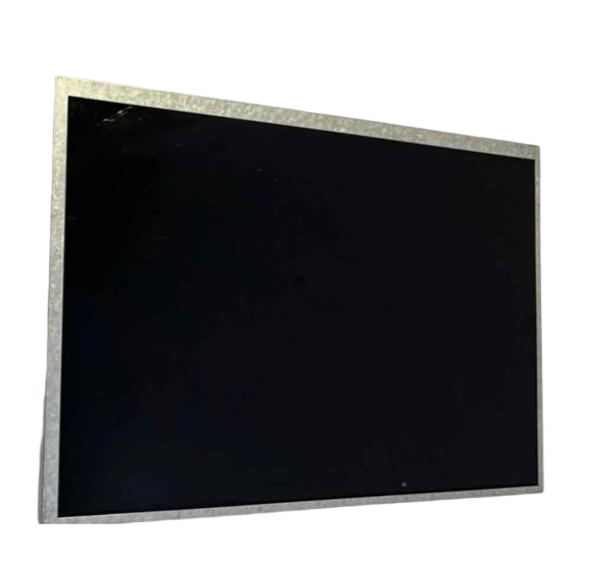
Is 1000 nits enough? It’s just the threshold for "basic readability."
In the industry, 1000 nits is generally considered the starting point for "basic outdoor readability." Under strong ambient light—but not direct sunlight—
a 1000-nit display, when paired with effective anti-reflective treatment, can keep content legible. However, in direct sunlight, ambient illuminance can
easily exceed 100,000 lux. In such conditions, even a 1000-nit display may struggle to overcome the interference caused by reflected light. While 1000 nits
can solve the problem of content being "unclear," it falls short of ensuring a comfortable viewing experience or maintaining strong contrast.
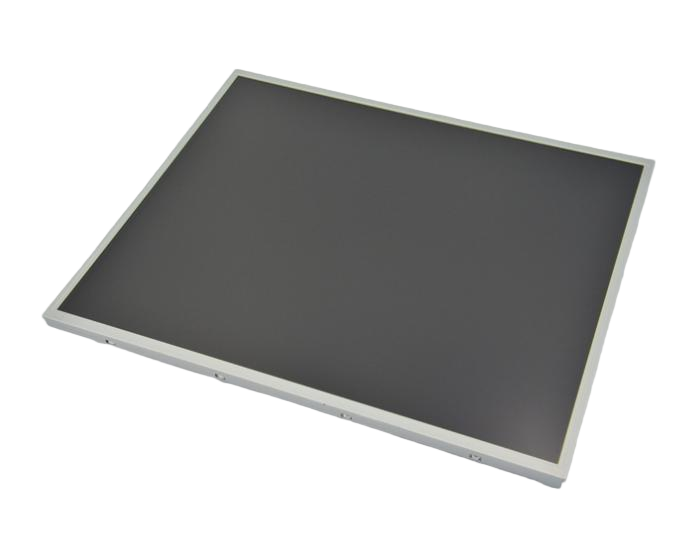
Reflection Control: A More Critical Variable Than Brightness
At its core, sunlight readability is a contest between the display’s own brightness and the brightness of reflected light. An untreated glass surface has a
reflectance of approximately 4%; in bright light, the reflected glare can reach around 1274 nits—drowning out the display’s 1000-nit output and causing
the image to appear "washed out." By applying an anti-reflective (AR) coating to reduce reflectance to 1%, the reflected light drops to about 318 nits,
allowing the display’s content to become clearly visible once again. In other words, reducing reflectance from 4% to 1% can lead to a more significant
improvement in readability than increasing brightness from 1000 nits to 1500 nits. This is precisely where BOE and AUO truly distinguish themselves from
one another.
BOE demonstrates strong reflection control capabilities across certain product lines. Its "ADS Pro" technology claims to achieve an ultra-low reflectance
of under 1.2%, while its industrial-grade high-brightness displays feature anti-reflective coatings that keep reflectance at or below 2.8%. In the automotive
sector, displays supplied by BOE for vehicles—such as those used by XPeng—are explicitly marketed as having "low-reflection treatment" to mitigate the
impact of direct sunlight.
AUO, for its part, has long positioned anti-reflection as a core selling point for its outdoor and automotive products. Its A.R.T. (Advanced Reflectionless
Technology) utilizes a specialized surface structure to alter the direction of reflected light, combined with an ultra-low-reflectance coating to suppress
glare. For specific industrial models, AUO’s 1000-nit high-brightness displays are specified with a surface reflectance of less than 5%, employing a
matte hard coating to diffuse reflected light. In its automotive display marketing, AUO highlights its ability to "prevent screen washout under intense
light through high optical contrast and anti-reflective coatings."
It is important to note that even among displays with the same "1000-nit" brightness rating, reflectance levels can vary—for instance, a display with <5%
reflectance is not necessarily on the same level as one featuring more advanced anti-reflective (AR) treatment. The same applies to BOE’s product lineup.
Consequently, attempting to judge the superiority of one brand over the other without considering specific models can be misleading. A more pragmatic
approach is to prioritize modules that offer lower reflectance and utilize full lamination (which eliminates the air gap)—a criterion far more meaningful
than simply fixating on the brand name.
Scenario Adaptation: Distinct Areas of Focus
In terms of product positioning, AUO established a clearer and earlier market identity centered on the specific requirement of "sunlight readability." In the
10.1-inch 1280×800 category, BOE’s EV101WXM-N10 model offers a brightness of 400 nits (intended for indoor use), whereas AUO’s G101EVN03.1 is
designed for outdoor environments with a brightness of 1000 nits. This highlights a divergence in product strategy for this size segment: AUO possesses
a more extensive portfolio of high-brightness outdoor industrial displays, backed by a strong track record in "sunlight-readable" technology.
BOE, by contrast, excels in the large-scale deployment of automotive displays and in advanced reflection-control technologies. As a global leader in
automotive display shipments, BOE has successfully integrated low-reflection and anti-glare surface treatments into a wide range of mass-produced
vehicle models. Furthermore, in emerging areas like Mini LED, BOE has demonstrated an ability to achieve high peak brightness while maintaining low
reflectivity. For applications such as automotive or industrial control—where high reliability and precise optical bonding are essential—BOE’s
high-end product lines are highly competitive.
Conclusion
If you focus solely on the "1000-nit" figure, both displays might only be "barely readable" under direct sunlight; the true deciding factors are reflectivity
and surface treatment. All else being equal, prioritize modules that explicitly specify low reflectivity (e.g., ≤2% or featuring an AR coating) and utilize
full optical bonding. In terms of market positioning, AUO offers a more mature product line with a clear "sunlight-readable" designation for outdoor
industrial use, while BOE demonstrates superior technical capabilities in low-reflection automotive displays. Ultimately, your choice should not be
based on the brand alone, but rather on the specific model’s reflectivity specifications, the type of surface treatment (AR vs. AG), and whether it
features full optical bonding—these three factors are far more critical than the "1000-nit" rating in determining whether the display will actually be
legible under sunlight.
Previous None
+0086 755 21042870
+0086 755 2822 5493
Shenzhen Company: 5/F, Building 211, Tairan Science Park, Tairan 4th Road, Shatou Street, Futian District, Shenzhen(518040), China.
Dongguan Factory: 2/F, Building D, Fulin Industrial Park, Weixi Road, Dalingshan Town, Dongguan City(523831), Guangdong,China
NAVIGATION
REQUEST A QUOTE



Scan to wechat