Apr. 08, 2026
Driven by the digital wave, capacitive touchscreens have become a core interactive component of self-service terminals, profoundly changing service
models across various industries. From restaurant self-service ordering to government service hall transactions, from medical registration to
transportation ticketing, capacitive touchscreens, with their sensitive touch experience and intuitive operation logic, significantly lower the
barrier to entry for users, making them easy for the elderly, children, and other groups to use.
Technological Advantages: From "Forceful Pressing" to "Fingertip Touch"
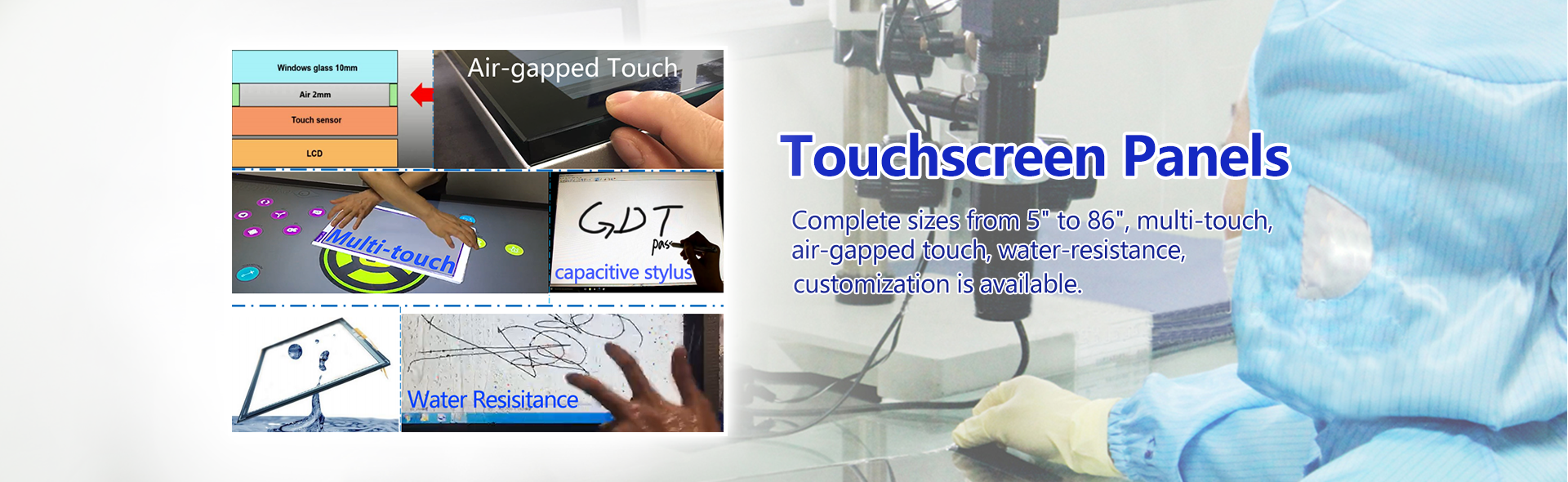
Unlike traditional resistive screens that require physical pressure to trigger, capacitive screens are based on the principle of electric field induction
—when a finger touches the screen, it changes the local electric field distribution, thereby achieving precise positioning. This technology brings a
qualitative leap: the response speed has been reduced from 50-100 milliseconds for resistive screens to less than 10 milliseconds, supporting
multi-touch and gestures such as zooming and swiping, providing an operating experience comparable to smartphones. At the same time,
the tempered glass surface of capacitive screens gives them a light transmittance of over 90%, resulting in clear images, wear and scratch
resistance, and a lifespan of over 8 years, far superior to the 3-5 years of resistive screens.
Core Applications: Covering Self-Service Scenarios Across Multiple Industries
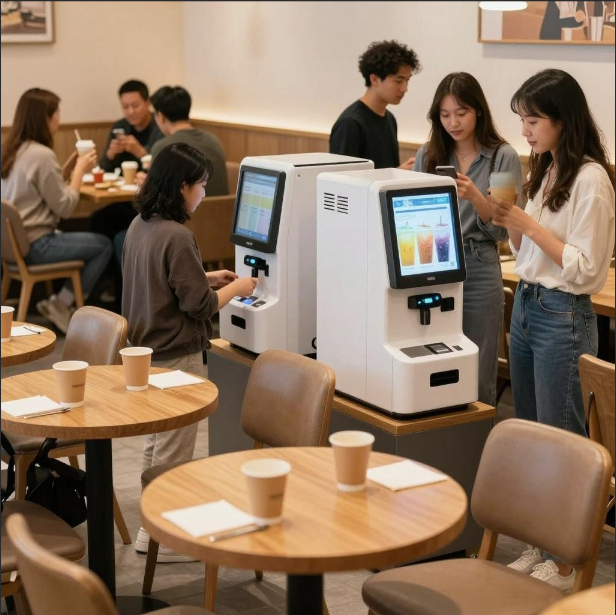
In the catering and retail sector, self-service ordering machines and self-service checkouts utilize capacitive touchscreens to enable functions
such as QR code payment, menu browsing, and order synchronization, effectively alleviating manual labor pressure and reducing customer
waiting times. In the smart healthcare sector, self-service registration and payment terminals and mobile nursing carts are equipped with
capacitive touchscreens, supporting glove touch and alcohol disinfection, ensuring infection control requirements while improving patient
access efficiency. In government services, self-service terminals in government service halls integrate high-speed scanners and fingerprint
recognition modules, allowing citizens to independently complete social security inquiries, certificate printing, and other services.
Furthermore, capacitive touchscreen self-service devices are also widely used in scenarios such as transportation ticketing, hotel
check-in, and library borrowing.
Industrial-Grade Protection: Ensuring Stable 24/7 Operation
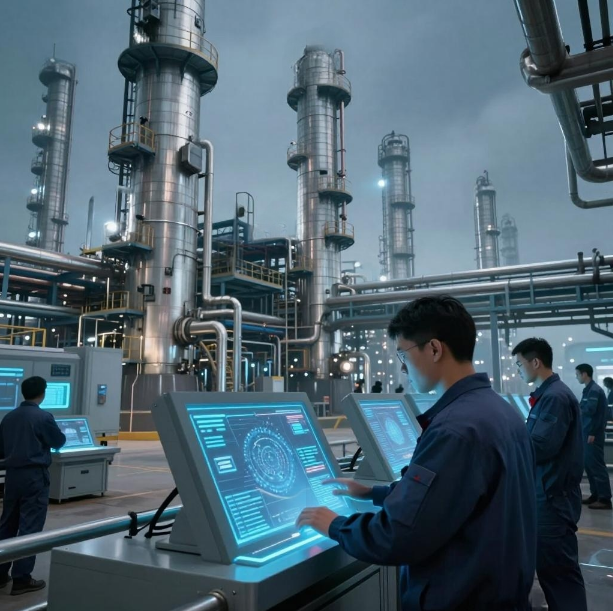
Self-service machines are deployed in public places for extended periods, placing extremely high demands on durability. Modern industrial-grade capacitive
touchscreens typically feature IP65 protection ratings and Mohs 7 tempered glass, effectively preventing dust, water, scratches, and impacts. They support
a wide operating temperature range of -20℃ to 60℃ and remain stable in complex environments such as high temperature and humidity, and environments
with oil fumes and dust. Data from a chain brand's actual testing shows that after adopting industrial-grade capacitive touchscreens, the equipment failure
rate decreased by 42%, and the average daily order volume per machine increased by 27%.
Future Trends: Intelligent and Diversified Evolution
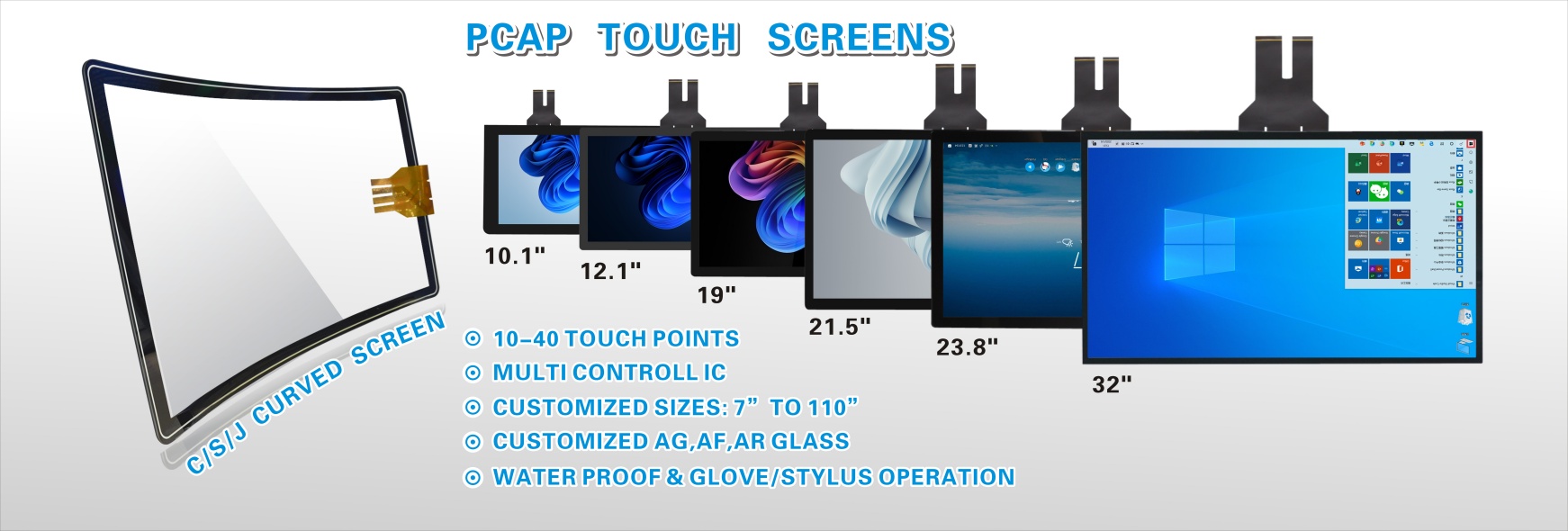
With the integration of AI technology and high-sensitivity touch algorithms, capacitive touchscreens are developing towards greater intelligence and durability.
Customized functions such as support for gloved touch, wet-hand operation, and antibacterial coatings are constantly emerging, meeting the precise operation
needs of special scenarios such as kitchens and medical settings. It is foreseeable that capacitive touchscreens will continue to serve as the "intelligent
interaction window" for self-service terminals, accelerating the transformation of various industries towards digital and unmanned services.
+0086 755 21042870
+0086 755 2822 5493
Shenzhen Company: 5/F, Building 211, Tairan Science Park, Tairan 4th Road, Shatou Street, Futian District, Shenzhen(518040), China.
Dongguan Factory: 2/F, Building D, Fulin Industrial Park, Weixi Road, Dalingshan Town, Dongguan City(523831), Guangdong,China
NAVIGATION
REQUEST A QUOTE