Oct. 15, 2026
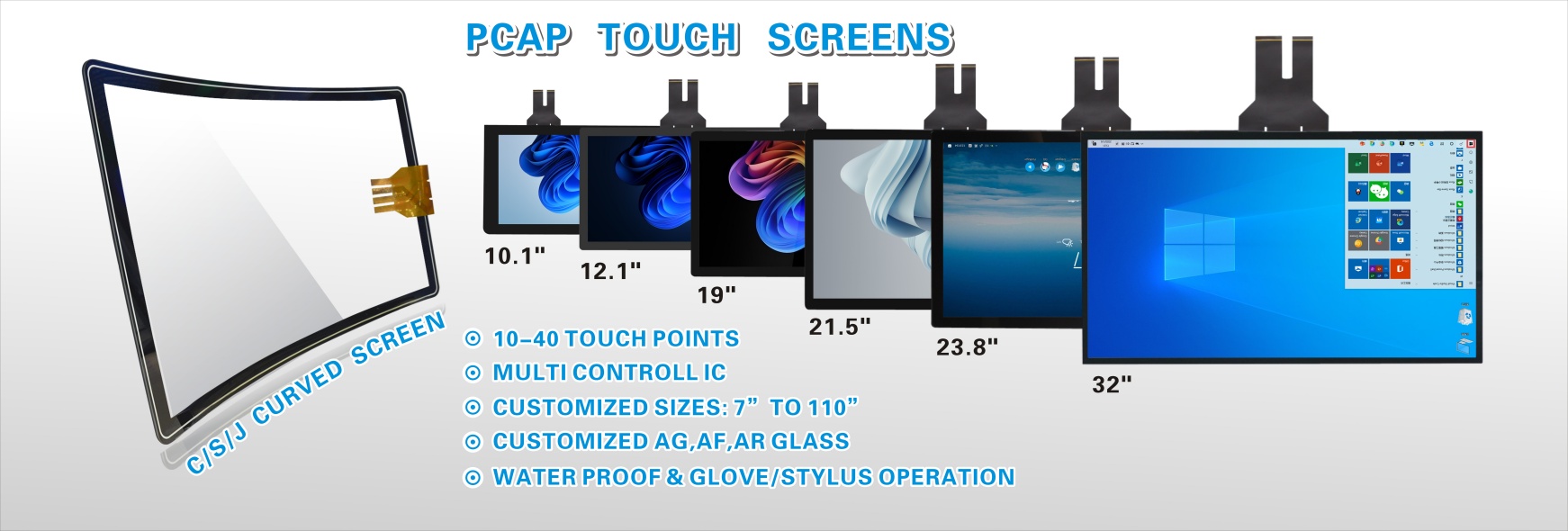
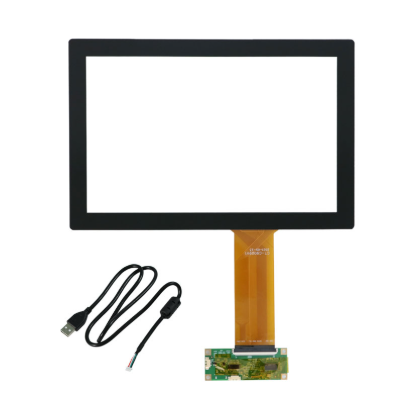
In the era of industrial automation and intelligent manufacturing, the Human-Machine Interface (HMI) plays a critical role. Among these, the 10.1-inch
industrial touchscreen has emerged as one of the most widely used display and control terminals in the field of industrial automation, thanks to its
optimal size, reliable performance, and flexible deployment options. Striking a balance between the constraints of smaller screens and the excessive
space requirements of larger panels, it maximizes both the amount of information displayed and the ease of operation within a limited footprint.
This article explores the primary applications of 10.1-inch industrial touchscreens from several perspectives.
I. Serving as the Core Operating Terminal for Industrial Equipment
The most common application for a 10.1-inch touchscreen is as a local operating interface for various types of industrial equipment. On automated
machinery—such as CNC machine tools, injection molding machines, packaging equipment, and textile machinery—operators use the touchscreen
to configure process parameters, start or stop equipment, switch operating modes, and monitor real-time data. The 10.1-inch display area provides
sufficient space to present multiple parameter windows and control buttons simultaneously, while resolutions of 1280×800 or 1920×1200 ensure
that text, charts, and graphics remain clear and legible. Compared to traditional physical control panels, touchscreens offer dynamic, context-specific
displays; this significantly reduces the number of physical buttons, lowers the risk of hardware failure, and gives equipment a cleaner, more modern
appearance.
II. Enabling Visual Monitoring of Production Line Data
On the factory floor, 10.1-inch touchscreens are frequently deployed as data monitoring terminals for production lines. By communicating with devices
such as PLCs, sensors, and instrumentation, they collect critical data—including temperature, pressure, flow rate, rotational speed, and production
output—in real time. This information is then presented intuitively through digital readouts, trend curves, bar charts, and animations. Instead of
having to open electrical cabinets to check individual gauges, supervisors or inspection personnel can assess the operational status of an entire
production line directly via the touchscreen. In the event of an anomaly, the screen provides alerts—such as color changes or pop-up notifications
—enabling staff to quickly identify issues and minimize equipment downtime. III. Support for Device Parameter Configuration and Commissioning
For equipment manufacturers and system integrators, a 10.1-inch touchscreen serves as an ideal tool for on-site commissioning and parameter
configuration. Engineers can navigate through various menu levels to modify PID parameters, set communication addresses, calibrate sensors,
and configure I/O mappings. Because a 10.1-inch screen can display comprehensive parameter lists and descriptive text, it offers significantly
higher commissioning efficiency compared to smaller displays. Furthermore, most industrial touchscreens support the import and export of
recipes and project files via USB flash drives, facilitating the rapid deployment and maintenance of equipment in batches.
IV. Application in Harsh Industrial Environments
Unlike commercial tablets, industrial-grade 10.1-inch touchscreens are typically designed for wide-temperature operation (from -20°C to 70°C),
feature high ingress protection ratings (IP65/IP66 for the front panel), offer resistance to vibration and shock, and comply with electromagnetic
compatibility (EMC) standards. Consequently, they are widely used in demanding environments such as food processing facilities (which require
frequent wash-downs), chemical plants (exposed to corrosive gases), outdoor enclosures, and vehicle-mounted systems. In these settings, the
touchscreen must not only handle display and operational tasks but also ensure long-term, stable performance—often requiring a mean time
between failures (MTBF) of tens of thousands of hours.
V. Use as a Display Terminal for Embedded Systems
In sectors such as medical instrumentation, intelligent warehousing, self-service kiosks, and power monitoring, 10.1-inch touchscreens are
frequently integrated into equipment as embedded components. They connect to the main control board via interfaces like VGA, HDMI, LVDS,
or MIPI, and run operating systems such as Windows, Linux, or Android. When paired with configuration software or custom applications, they
enable specific functionalities. For instance, in smart parcel lockers, a 10.1-inch screen facilitates the entry of pickup codes and the playback
of video content; in electrical cabinets, it displays system schematics and the status of switches. Their low-power, fanless design also meets
requirements for quiet operation and energy efficiency.
VI. Driving the Industrial Internet of Things (IIoT) and Remote Operations & Maintenance
With the advancement of the Industrial Internet of Things (IIoT), 10.1-inch touchscreens have evolved beyond simple local display devices to
become nodes for edge computing. It can upload on-site data to a cloud platform via Ethernet, 4G/5G, or Wi-Fi, while also supporting remote
screen streaming and VNC access. This allows operations and maintenance personnel—even when not physically present—to view the same
interface via a mobile phone or computer, facilitating remote diagnostics and guidance. Consequently, this significantly improves the response
speed of after-sales services and reduces travel-related costs.
Conclusion
In summary, 10.1-inch industrial touchscreens serve a wide range of functions, including equipment operation, data monitoring, parameter
debugging, deployment in harsh environments, embedded integration, and remote IoT-based operations and maintenance. They act not
only as human-machine interfaces (HMIs) on the industrial floor but also as vital bridges connecting the physical and digital worlds. As
smart manufacturing and Industry 4.0 continue to advance, 10.1-inch touchscreens will remain indispensable in the field of industrial
automation, thanks to their well-balanced dimensions, reliable quality, and flexible expansion capabilities.
+0086 755 21042870
+0086 755 2822 5493
Shenzhen Company: 5/F, Building 211, Tairan Science Park, Tairan 4th Road, Shatou Street, Futian District, Shenzhen(518040), China.
Dongguan Factory: 2/F, Building D, Fulin Industrial Park, Weixi Road, Dalingshan Town, Dongguan City(523831), Guangdong,China
NAVIGATION
REQUEST A QUOTE


Scan to wechat