Nov. 20, 2026
As the two-day APEC meetings in Shenzhen conclude, a more profound transformation has already been quietly unfolding—not within the conference
halls, but in the daily journeys and routines of ordinary people. The "Shenzhen Initiative" of the 2026 APEC CEO Summit has embedded the principles
of "openness and inclusivity, innovative growth, connectivity, and mutually beneficial cooperation" into the framework of Asia-Pacific collaboration.
Shenzhen’s own contribution to this vision is manifested in the glowing screens that dot the city and the countless interactions initiated by a simple
touch of a fingertip.
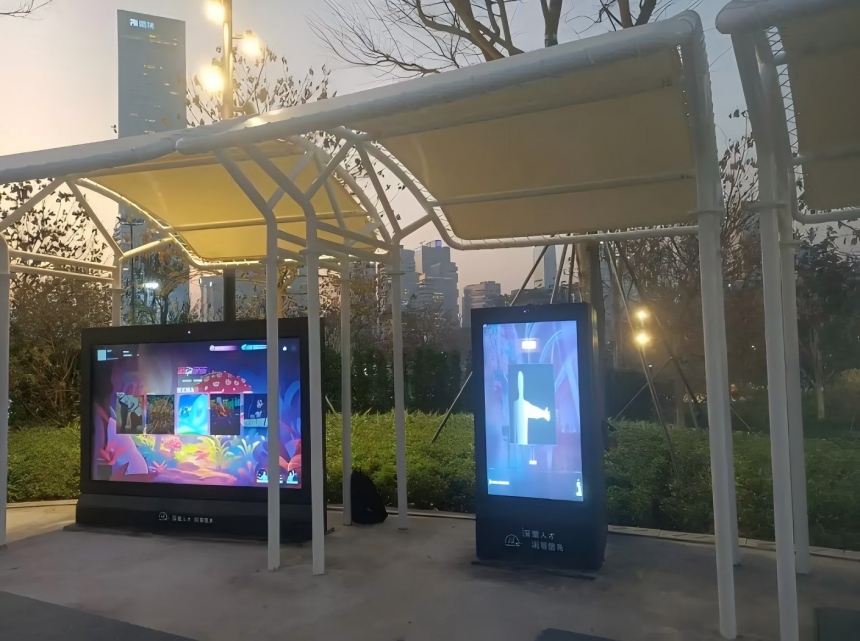
At Talent Park, amidst the light and water show themed around APEC, images of subways, humanoid robots, and cargo ships emerge—unfolding an
immersive, futuristic panorama across the lake’s surface and the facade of the iconic "Spring Bamboo" (China Resources Tower). The interactive
large screens and outdoor displays throughout the park are more than mere showcases for technology; integrated with features like the "Starlight
Bridge" and various maker spaces, they bring "talent" and "technology" together within the public realm. A casual passerby can, with a single tap
on a screen, tap into the city’s entire vision for innovation.
What makes these touchscreens truly compelling is that they have transcended the status of mere "hardware." In the Shenzhen Metro, robotic "new
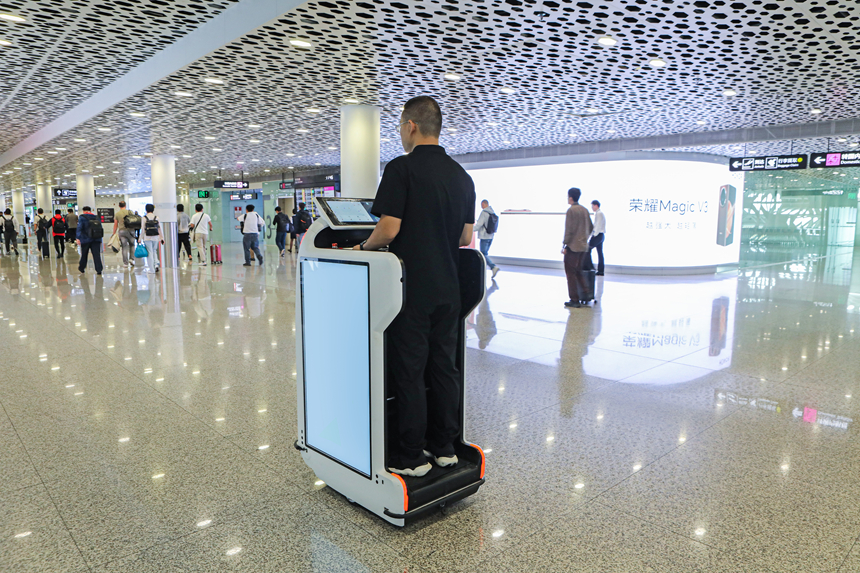
recruits" navigate ticket gates, ride elevators, and glide into train carriages, taking on routine, mundane tasks. Interactive interfaces supporting over
30 languages ensure that travelers from anywhere in the world can be understood in an instant. At the airport, AI-powered assistants engage in
cross-lingual conversations with passengers, while robotic "store managers" serve coffee from behind glass counters—the screens serving not
only as points of service but as natural conduits for communication between strangers. When a screen can provide directions to a visitor, enlarge
text for an elderly person, or facilitate seamless, frictionless passage for someone in a hurry, technology ceases to be an abstract concept—it
becomes woven into the very fabric of daily life.
That all of this is taking place in Shenzhen is due, fundamentally, to the city’s spirit of "openness." By opening nearly 300 "city + AI" application
scenarios to robots, Shenzhen has created an environment where technology can iterate, undergo trial and error, and flourish within the real world.
The Executive Director of the APEC Secretariat has described Shenzhen as the "innovation code" for Asia-Pacific cooperation. The essence of this
code is quite simple: a civic mindset that embraces the new, and a spirit of collaboration that invites participation from people of all backgrounds.
Although the two-day meeting has concluded, the process of implementing the "Shenzhen Initiative" is only just beginning. The touchscreens all
around us serve as a reminder to every partner—whether from home or abroad—that future progress will not emerge from isolated laboratories;
rather, it will spring from open interfaces, inclusive platforms, and the hands of those willing to reach out and connect with one another. By
bringing diverse talents together onto a shared interface—and ensuring that technology and innovation remain focused on the betterment
of daily life—a city or a region can forge the most reliable path toward a brighter tomorrow.
Previous None
+0086 755 21042870
+0086 755 2822 5493
Shenzhen Company: 5/F, Building 211, Tairan Science Park, Tairan 4th Road, Shatou Street, Futian District, Shenzhen(518040), China.
Dongguan Factory: 2/F, Building D, Fulin Industrial Park, Weixi Road, Dalingshan Town, Dongguan City(523831), Guangdong,China
NAVIGATION
REQUEST A QUOTE


Scan to wechat