Aug. 20, 2026
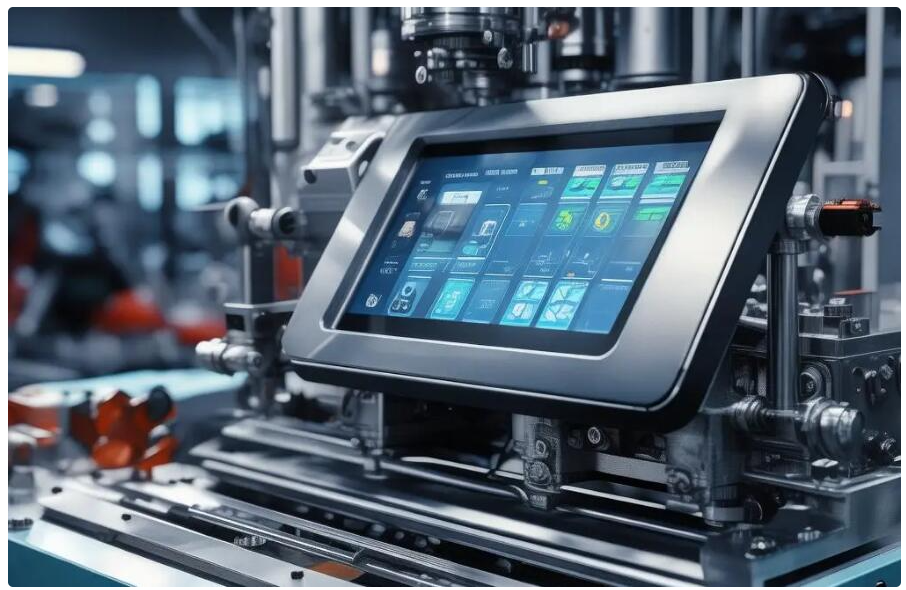
Industrial touch-screen all-in-one PCs are widely used in the digital and intelligent transformation across various industries. Their core value lies in the
integration of high-performance computing, industrial-grade touch displays, and diverse communication interfaces, enabling them to serve as reliable
Human-Machine Interfaces (HMIs) and edge computing terminals.
Here are specific applications in key sectors:
1. Smart Manufacturing and Production Line Automation: Acting as a central "nerve center" to connect and monitor equipment such as CNC
machine tools and robotic arms, allowing for real-time parameter adjustments on the shop floor; serving as MES (Manufacturing Execution System)
terminals to enable paperless workflows for job dispatching, progress reporting, and quality traceability; and functioning as AGV dispatching interfaces
and equipment dashboards to monitor key metrics like OEE in real-time.
2. Machine Vision and Intelligent Inspection: Serving as the "brain" of vision systems by connecting to industrial cameras and running AI algorithms
to efficiently perform product defect detection and character recognition (OCR). In sectors like 3C electronics manufacturing, they ensure stable 24/7
operation, significantly boosting inspection efficiency.
3. Automotive Manufacturing: Used as "smart dashboards" on the shop floor to visualize production takt times and identify bottlenecks in real-time.
With high protection ratings (IP65/IP69), they withstand harsh environments such as welding and painting areas; they also support direct connections
to Andon buttons via industrial I/O ports, serving as a core component of lean manufacturing.
4. Smart Logistics and Warehousing: Operating reliably 24/7 on equipment like sorting lines and forklifts to display logistics status in real-time, while
withstanding the high temperatures and vibrations common in warehousing and transport. They are also used for touch-based control in applications
such as high-density mobile shelving systems.
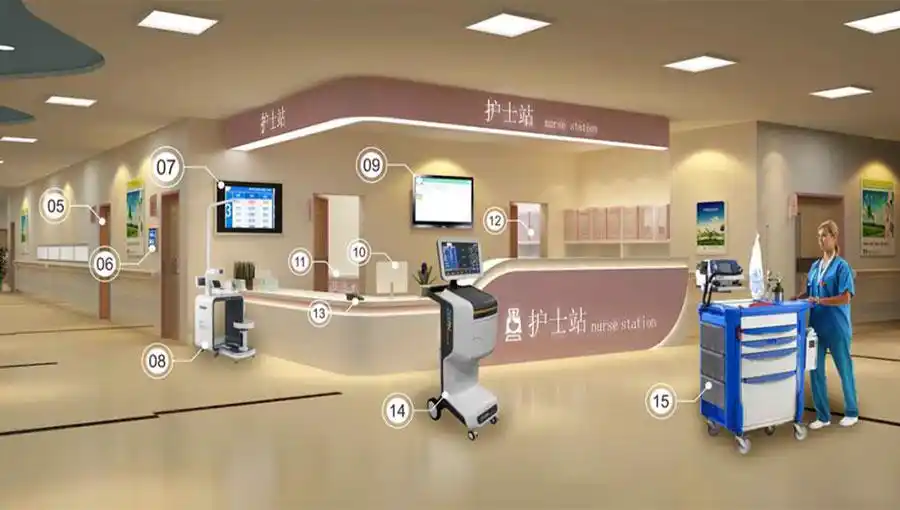
5. Smart Healthcare: Featuring all-metal housings, corrosion and moisture resistance, and anti-interference capabilities, they are integrated into
centralized operating room control systems; they serve as HMIs for equipment like CT scanners and as information terminals at nurse stations; their
IP65-rated front panels facilitate easy disinfection and cleaning for hospital self-service kiosks.
6. Precision and Specialized Manufacturing: In the semiconductor, photovoltaic, and lithium battery industries, they meet strict cleanroom
requirements for dust and corrosion resistance; in laser processing and 3D printing, they provide intuitive interfaces for fine-tuning operations;
they are also widely used for controlling machinery such as machine tools, pharmaceutical equipment, and tobacco processing machinery.
7. New Energy and Energy Management: Acting as the "smart brain" of energy management systems to monitor processes such as power generation
and energy storage. In LNG refineries, they are also utilized in PLC-HMI monitoring systems to ensure operational safety.
8. Smart Cities and Public Services: Serving as the core for self-service terminals or equipment interaction, they are applied in sectors such as rail transit
and smart retail (e.g., parcel lockers).
In summary, thanks to features such as high protection ratings, high reliability, robust interactivity, and scalability, all-in-one industrial control units have
become key devices driving the intelligent transformation of various industries.
+0086 755 21042870
+0086 755 2822 5493
Shenzhen Company: 5/F, Building 211, Tairan Science Park, Tairan 4th Road, Shatou Street, Futian District, Shenzhen(518040), China.
Dongguan Factory: 2/F, Building D, Fulin Industrial Park, Weixi Road, Dalingshan Town, Dongguan City(523831), Guangdong,China
NAVIGATION
REQUEST A QUOTE


Scan to wechat