Mar. 18, 2026
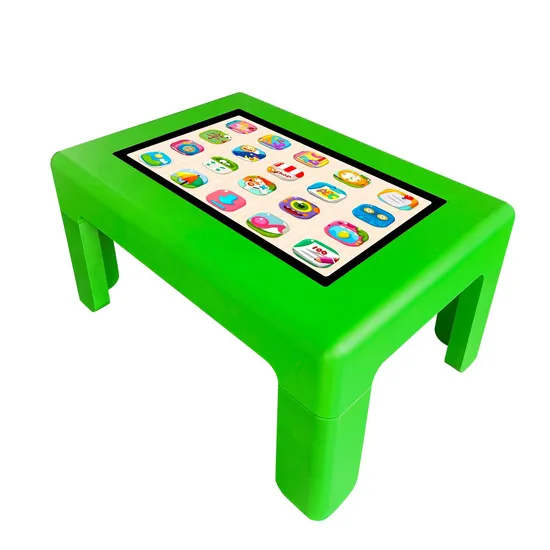
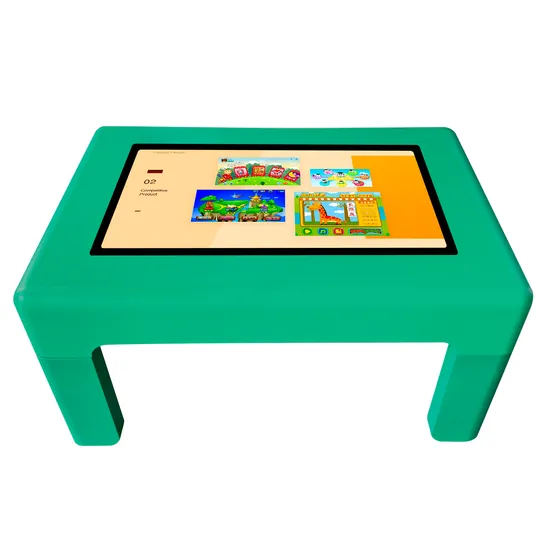
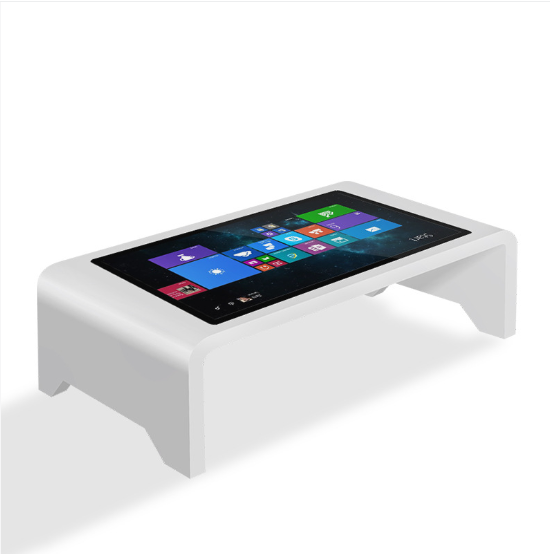
Capacitive touchscreens, with their smooth multi-touch experience and high durability, are redefining the way people interact with digital information,
becoming a core technology in touch table applications. They are not only shining in commercial displays and leisure entertainment, but also showing
great potential in education, museums, and other scenarios.
I. Core Technological Advantages
The application of capacitive touchscreens in touch tables is primarily based on their projected capacitance technology. Unlike traditional resistive or
infrared screens, they locate themselves by sensing the weak current from the human body, achieving true multi-touch and high-precision operation.
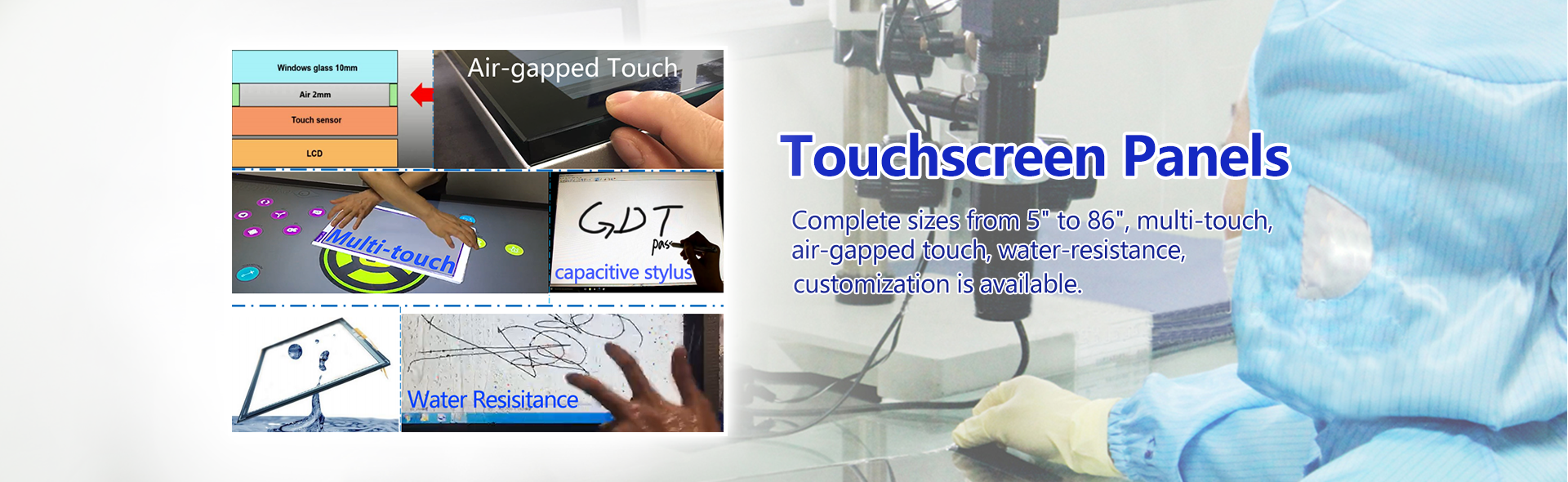
Users can perform complex gestures such as dragging, zooming, and rotating on the table with both hands, just like operating a smartphone, with a
response time as short as 5 milliseconds. Furthermore, modern capacitive screens use a full lamination process, possessing high light transmittance
and resistance to strong light interference, displaying clear and sharp 4K images even in bright environments.
II. Durability in Complex Environments
Touch tables often face severe challenges such as spilled beverages and scratches from hard objects. High-end capacitive touch tables feature reinforced
glass covers, which are not only scratch- and explosion-proof but also protected against liquids and dust through sealing technology. Some advanced
projected capacitive technologies (such as PCT) can even penetrate 10mm thick wood or glass panels for sensing, allowing designers to perfectly conceal
touch sensors, creating a seamless and stylish desktop while maintaining high environmental adaptability.
III. Rich Interactive Function Expansion
Based on the sensitivity and scanning capabilities of capacitive screens, touch tables can achieve intelligent interactions beyond simple touch control.
For example, object recognition technology allows special "tokens" to be placed on the table, and the screen automatically recognizes them and pops
up corresponding multimedia content, providing a new dimension for educational games and interactive exhibits. Simultaneously, touch tables can
easily integrate NFC, RFID readers, and wireless charging modules for applications in identity recognition, interactive ordering, or smart retail scenarios.
IV. Main Application Scenarios
· Commercial and Exhibition: In museums, science and technology museums, and sales offices, capacitive touch tables serve as electronic sand tables
and interactive query systems, supporting multiple users simultaneously accessing information and enhancing the visitor experience.
• Dining and Entertainment: Interactive tables allow customers to order food and play games directly at the tabletop, creating a novel dining experience.
• Education and Meetings: As an intelligent teaching tool, it supports simultaneous writing and operation by multiple people, promoting collaborative
learning.
In conclusion, capacitive touchscreens, with their precision, durability, and multifunctionality, are continuously expanding the boundaries of human-computer
interaction, becoming a key entry point for future intelligent spaces.
+0086 755 21042870
+0086 755 2822 5493
Shenzhen Company: 5/F, Building 211, Tairan Science Park, Tairan 4th Road, Shatou Street, Futian District, Shenzhen(518040), China.
Dongguan Factory: 2/F, Building D, Fulin Industrial Park, Weixi Road, Dalingshan Town, Dongguan City(523831), Guangdong,China
NAVIGATION
REQUEST A QUOTE